Practical guide
Team management
5 min
Rédigé le
Leading organizational change: 8 best practices to drive successful transformation and overcome resistance
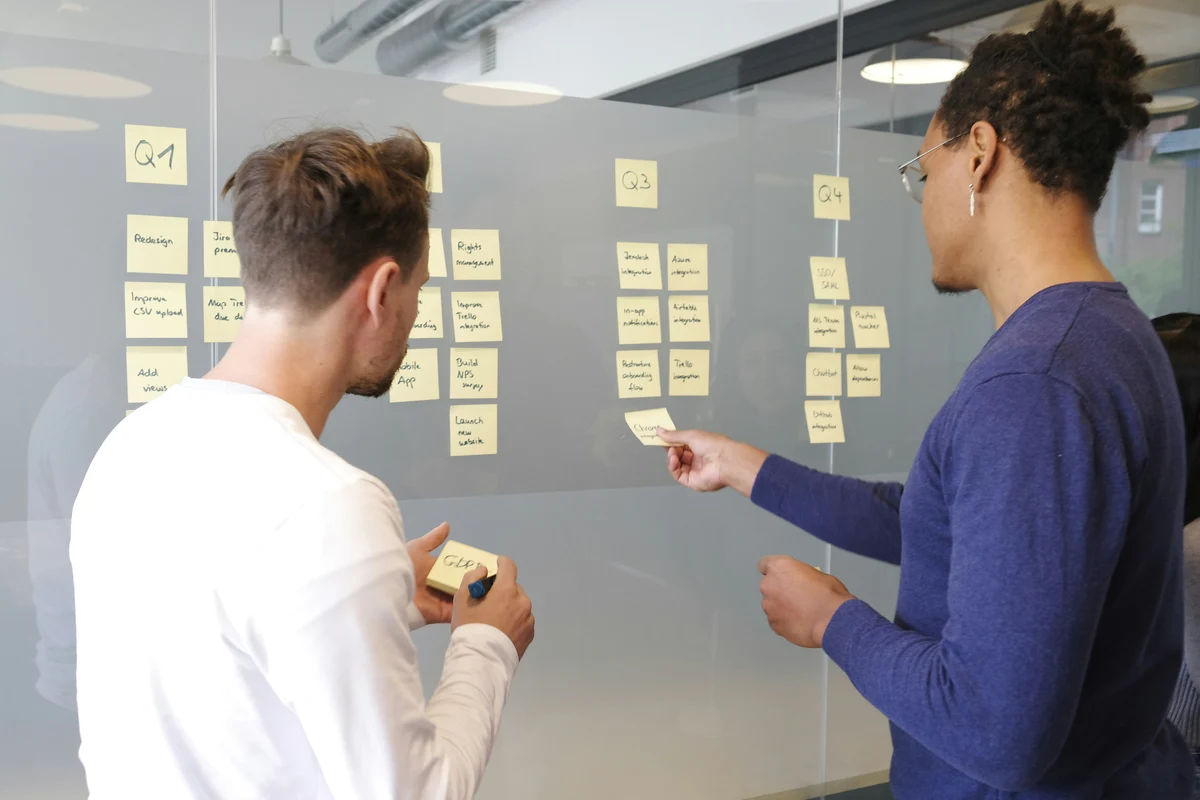
Guiding organizational change is not something you can just wing. Despite decades of research, dozens of models, and thousands of documented transformation projects, organizations continue to make the same mistakes. They communicate about change without creating the conditions for buy-in. They deploy tools without training people. They launch transformations without taking the time to understand what employees are actually experiencing.
The result is predictable: according to Prosci (Best Practices in Change Management, 2023), projects with structured human support are 7 times more likely to meet their goals than those without. Conversely, a lack of support is the primary cause of failed transformations, far ahead of technical design flaws. The strategy can be flawless. If your people are not on board, it will not take hold.
This article presents the 8 best practices that make the difference between transformations that succeed and those that stall. They draw on the contributions of leading change theorists (Lewin, Kotter, Kanter), proven field practices, and lessons from recent transformations involving AI and automation.
Why resistance to change is a resource, not an obstacle
Before diving into best practices, we need a shift in perspective. Too often, resistance to change is viewed as a problem to eliminate, a sign of inertia, or even bad faith. This interpretation is not only inaccurate; it is counterproductive.
Kurt Lewin demonstrated this as early as the 1940s: resistance is a normal response to a disrupted status quo. It signals that people care about something they value: a way of working that suits them, a role that makes them feel competent, or relationships built over time. Understanding what they hold dear is key to helping them find their place in the new context.
Organizations that treat resistance as a valuable signal rather than an obstacle to bypass drive deeper, more sustainable transformations with fewer human casualties. We designed the following 8 best practices with this mindset.
The 8 best practices for guiding organizational change
1. Diagnose before taking action
The first mistake in transformation projects is confusing speed with haste. Before launching any communication or support action, you must understand the environment where the change will take place.
This assessment must cover several dimensions. The organizational dimension: which processes, systems, and structures are affected? The human dimension: which groups are affected, how intensely, and what are their specific challenges? The cultural dimension: which norms, values, and habits will the change disrupt? And the buy-in dimension: where do the teams stand today regarding this project?
A well-conducted assessment allows you to anticipate predictable resistance, tailor support levers to the affected groups, and avoid classic mistakes that stem from misreading the situation. This can take the form of individual interviews, focus groups, surveys, or collaborative diagnostic workshops. Investing this time upfront almost always pays off a hundredfold in the fluid execution of the rollout.
2. Build a legitimate sense of urgency
This is the first of the eight steps in Kotter’s model, and he did not put it first by accident. Without a shared belief that the status quo is riskier than change, organizations cannot mobilize the necessary collective energy. This sense of urgency is the fuel for all the subsequent steps.
Building this sense of urgency does not mean causing panic or overplaying a threat to manipulate teams. It means making the business environment visible and understandable to everyone: market developments, competitive shifts, customer expectations, and the impacts of AI on the sector. Employees need to understand why change is necessary now, not in two years.
This urgency must be legitimate, meaning it is based on tangible realities and communicated honestly. A manufactured urgency breeds distrust as soon as employees sense manipulation. On the other hand, a real, well-communicated urgency creates collective energy that significantly eases buy-in for the necessary transformations.
3. Build a strong guiding coalition
No change succeeds under the impulse of a single person, even the most charismatic leader in the organization. Change needs a coalition—a group of influential, trusted people who collectively champion the change and who can embody it in their daily behavior.
This coalition must combine several types of authority. First, formal authority: managers and leaders who have the power to make decisions and allocate resources. Second, informal authority: people recognized by their peers for their expertise, commitment, or influence, regardless of their hierarchical position. We also need diverse representation: members from different functions, levels, and locations so that all affected groups feel represented.
These change ambassadors play a fundamental role: they share the vision with the teams, report back on signals of resistance or difficulty, and give the project credibility by championing it from the inside. Identifying and actively supporting them is an essential investment.
4. Create and share a clear vision of the future
Employees do not commit to a change if they do not understand the destination. A blurry vision generates anxiety, rumors, and conflicting interpretations that fuel resistance. A clear vision provides direction, meaning, and above all, an answer to the first question every employee asks: what will my role be in this new context?
A strong change vision has several qualities. It is simple: expressible in a few sentences everyone can understand. It is desirable: it shows a better future, not just a different one. It is realistic: it builds on tangible, credible foundations. And it is precise enough to guide the daily decisions of managers and teams without requiring hierarchical approval at every turn.
Creating this vision is not a solitary exercise for a few executives in a strategy meeting. The most rallying visions are those co-created with teams, or at least enriched by their input. This participation in the design is, in itself, a powerful lever for buy-in.
5. Involve employees in co-creation
This is one of the most consistent findings in organizational change research: people support what they help build. Participation is not a democratic luxury. It is an efficiency lever.
Involving employees does not mean asking for their opinion on everything or putting strategic transformations to a vote. It means giving them a real place in defining how the change will work: how the new practices will be organized concrete in their daily lives, what adjustments are needed to accommodate their specific constraints, and what resources they need to succeed in the transition.
Collaborative workshops, mixed working groups, and test-and-learn approaches with pilot teams are formats that enable this real participation. They have three powerful effects: they reduce resistance by turning potential opponents into co-authors of the change, improve the quality of solutions thanks to collective intelligence on the ground, and accelerate adoption by reducing the gap between the designed solution and the actual needs of users.
6. Communicate with transparency, repetition, and consistency
Communication is one of the most frequently cited levers in change projects, yet one of the most poorly utilized. Most organizations communicate too little, too late, and in too top-down a manner. They inform instead of dialogue. And they systematically overestimate real understanding among teams after a single meeting or email.
Effective communication in a change project relies on four principles. First, transparency: share what you know, share what you do not know yet, and do not try to minimize actual challenges. Next, repetition: hearing a message once does not mean it is adopted. Studies in organizational communication show that people need an average of seven exposures to a message for it to begin shifting their perceptions. Third, consistency between words and actions: nothing destroys the credibility of a change project faster than leaders who communicate a desirable future while continuing to behave like they did in the old world. Finally, two-way communication: create real spaces for listening, questions, and expressing doubts, giving employees the feeling of being heard and not merely informed.
7. Train for new skills and mindsets
Expecting employees to change without giving them the tools to do so is one of the most common contradictions in transformation projects. We demand new practices, new behaviors, and new ways of collaborating without investing in developing the skills that make these shifts possible.
Training within the context of training programs is not limited to technical mastery of new tools. It must also develop the behavioral and interpersonal skills that allow people to navigate change with confidence: the ability to operate in uncertainty, the capacity to learn quickly and autonomously, the aptitude to collaborate differently, and a mindset of curiosity toward the new rather than reflexive rejection.
For managers specifically, training programs must target their distinct role in change: how to create psychological safety for their team, how to handle individual resistance with empathy and resolve, how to guide progress without over-controlling, and how to give meaning to daily routines when the overall vision remains blurry. These skills do not happen by accident. You learn, practice, and reinforce them over time.
8. Manage long-term integration and measure buy-in
The final best practice is also the most neglected: managing change over time, long after the formal project rollout. Most organizations measure transformation success at launch. True transformation does not happen at implementation, but when new practices become habits and new norms permanently replace the old.
Measuring buy-in over time requires targeted indicators. You need more than just deployment metrics (how many people were trained, how many use the new tool). Look for real adoption indicators: are the new practices used in difficult situations, or only in easy ones? Do managers talk about the change positively or with distance? Have teams internalized the new norms, or do they apply them out of compliance without believing in them?
The ICAP model (Information, Comprehension, Adhésion, Participation) provides a useful framework to track these progressive levels of engagement. It helps pinpoint each affected group's level of ownership so you can adapt support actions. This fine-tuned management is what separates superficial transformations from sustainable change.
How to overcome resistance to change in practice
Beyond general best practices, you need an operational view of resistance and the levers to address it. Not all resistance looks alike, and not all of it calls for the same response.
Cognitive resistance: not understanding
Some resistance simply stems from a lack of understanding. The employee does not grasp why the change is necessary, or what it means practically for them. The answer lies in clear communication and education: explain the why before the how, provide concrete examples, and answer questions without dodging difficult topics.
Emotional resistance: feeling fear
Another type of resistance is emotional: fear of the unknown, fear of not being up to the task, or fear of losing what gives a sense of competence and recognition. Do not deny or minimize these fears. Instead, acknowledge them, create spaces where they can be expressed, and build support systems that allow people to progress at their own pace with the necessary support.
Political resistance: not wanting to
Some resistance is political: the change threatens power balances, territories, or established interests. This resistance is often the hardest to address because it is rarely expressed openly. It manifests as subtle foot-dragging, delays, and pseudo-buy-in that masks real opposition. The response requires identifying these political stakes during your initial assessment and holding direct discussions with the stakeholders involved to find acceptable compromises.
The 10-70-20 rule to prioritize your efforts
When working with a mixed group, a rule of thumb helps focus your efforts rather than scattering them. We regularly identify three profiles: active supporters (about 10%) who champion the change naturally and can act as ambassadors; opponents (about 20%) who actively resist; and a large middle majority (about 70%) who are waiting to see how things play out. The temptation is to spend most of your energy trying to convince opponents. This is a strategic mistake—the return on effort is rarely worth it. Your operational goal is to sway the majority toward positive neutrality, using your active supporters as a bridge. As this majority commits, opponents find themselves isolated, and their influence naturally fades.
FAQ: frequently asked questions about guiding organizational change
How long does it take to guide a change in business?
There is no standard timeline. The duration depends on the scope of the change, the predictable level of resistance, and the organization's maturity toward transformations. What is certain is that the locking-in phase always takes longer than anticipated. A good rule of thumb: plan for active support for at least as long as the rollout itself, and light follow-up for an additional six months after formal implementation.
What is the role of managers in guiding change?
Managers are the pivot point of change. They translate abstract vision into concrete reality for their teams. They detect subtle signals of resistance or burnout. They balance performance pressure with the time needed for adaptation. A manager who lacks support themselves often becomes an involuntary brake on their team's transformation. Training and supporting managers is a prerequisite, not an option.
How do you measure the success of a change management project?
Beyond deployment metrics (training rates, new tool usage), actual adoption indicators are the most revealing: are new practices used in tough situations? How have absenteeism or turnover evolved during the transition? Has team engagement improved? Do managers speak positively of the change to their teams? These qualitative indicators, paired with regular buy-in surveys, provide a true picture of real progress.
Can you guide change without an external consultant?
Yes, provided your organization has the internal skills in change management and the ability to step back and analyze its own culture objectively. The benefit of external resources is their objectivity, freedom of speech, and experience drawn from other contexts. The benefit of internal resources is their deep knowledge of your culture and people, and their long-term availability. The most effective approaches combine both.
What are the warning signs of a transformation that is stalling?
Several signs should alert you: rising turnover in affected teams, an increase in sick leave, a gradual slide back to old practices after rollout, a growing divide between teams whose managers champion the change and those whose managers merely endure it, and a drop in the quality of dialogue between teams and leadership. Individually, these signs can have other causes. Together, they almost always point to insufficient human support.
Conclusion: guiding change is a skill you can develop
Assess, build urgency, form a coalition, share a vision, involve, communicate, train, and manage long-term: these eight best practices are not boxes to check in a rigid order. They are levers to combine intelligently according to your context, people, and the nature of the change. What unites them is a shared belief: change cannot be decreed. It must be guided with a clear methodology, deep listening, and long-term focus.
As transformations accelerate, overlap, and affect deeper aspects of our professional identity, the capacity to guide change effectively becomes a strategic capability for organizations and the individuals within them. It is not something you improvise. You learn, practice, and reinforce it over time.
For organizations looking to build this capability internally, change management training programs help move from a knowledge of best practices to operational mastery, applied to each organization's real-world context.
SOURCES
The 8 best practices for leading change
Take action
A 30-minute conversation helps clarify what’s relevant for your teams.