Case study
Customer experience
8 min
Rédigé le
Client case study - Caisse d’Épargne
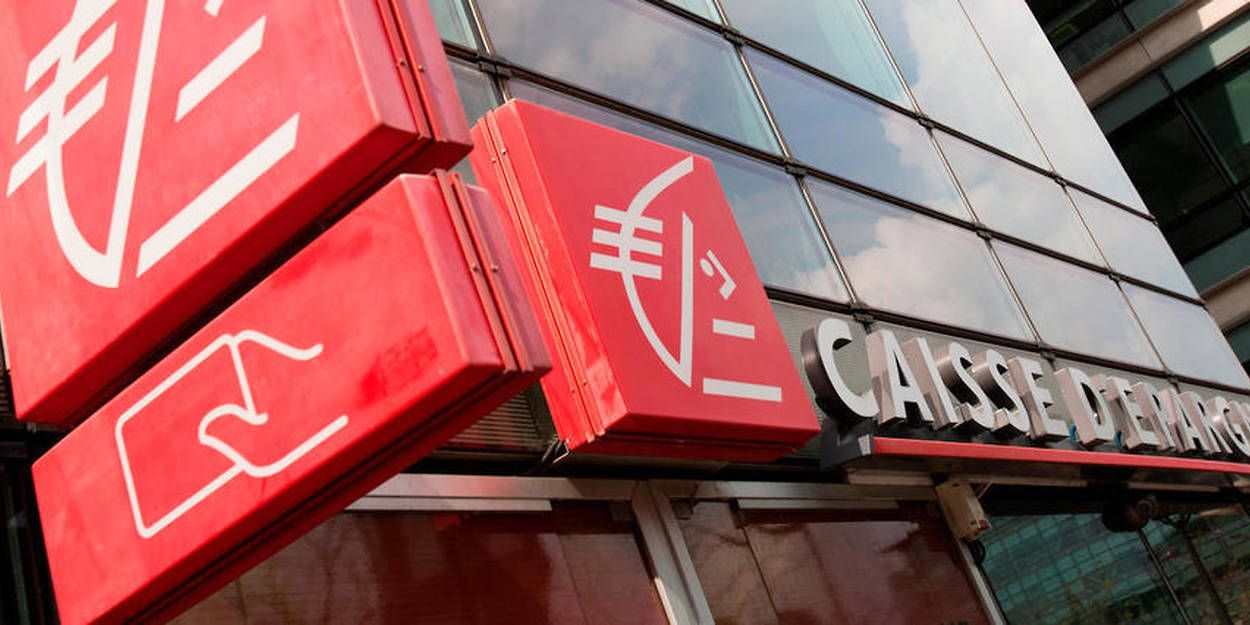
Turning incivility management into a calmer environment
Some on-the-ground challenges cannot be handled with a simple technical response. They call for a broader, more human approach, and a different way of training teams. That was exactly the context behind Caisse d’Épargne’s request, as it faced a rise in incivility in branches and wanted to give its employees concrete, lasting, reassuring guidance.
The goal was not only to pass on conflict management techniques. It was also to help teams regain a sense of relational safety, better understand the mechanisms at work in these situations, and develop a more stable stance in the face of behaviors that can sometimes be unsettling. In other words, the task was to train without adding weight, to equip without causing concern, and to build professionalism without rigidity.
The starting point: a need for calm in the face of rising incivility
Like many players in the banking sector, Caisse d’Épargne was seeing an increase in difficult behaviors in customer service interactions: tension in face-to-face exchanges, sharper challenges, verbal aggression, and pushback against decisions or explanations given by advisers. These situations were not always dramatic, but they still weakened the quality of the relationship and weighed on the day-to-day experience of teams.
In this context, the institution wanted to bring in a new provider capable of offering a response that truly fit the reality on the ground. The need was twofold. First, employees needed a clear method to anticipate, defuse, and manage incivility. Second, it was essential to create a learning environment that felt calm enough to address a sensitive topic, one that could be emotionally charged for participants themselves.
The request was therefore not just about training content, but about a real learning experience: useful, practical, reassuring, and immediately usable.
The trigger: an approach built on pedagogy, practice, and nonviolent communication
That is where our firm, Altival, stepped in with a proposal built around a simple principle: address a difficult topic without reproducing the tension it creates. To do that, our approach combined methodological input, role-play, and work on relational posture.
One of the strongest features of this intervention was the integration of nonviolent communication into the program. This choice was far from incidental. It gave participants a useful framework for understanding emotional reactions, setting boundaries, rephrasing, and responding firmly without escalation. It also helped create a lighter, more accessible, and more engaging learning atmosphere, despite the potential seriousness of the situations discussed.
The goal was clear: not to limit ourselves to “managing incivility” as an isolated incident, but to help employees develop more refined, more stable, and more protective relational reflexes, both for themselves and for the quality of the customer relationship.

The challenge: combining prevention, concrete management, and managerial support
The program designed for Caisse d’Épargne was structured around two complementary priorities.
Preventing incivility
The first aimed to anticipate incivility, helping participants identify weak signals, better understand triggering factors, and adjust their posture ahead of time to avoid escalation. This preventive dimension was essential, because not every difficult situation is resolved at the moment it breaks out; many can be defused earlier through a better reading of the relationship.
Managing aggression
The second priority focused on the practical management of incivility when it actually happens. Employees worked on how to stay calm, reset the tone without aggression, set limits, respond appropriately, and protect the relationship without giving up the professional framework. The aim was not to offer ready-made answers, but to help each person develop reference points they could use in a wide range of situations.
Managing
At the same time, we introduced the concept of managing incivility. This part highlighted an essential point: the quality of how these situations are handled does not rest solely with frontline employees. Managers also have a decisive role to play before, during, and after the incident. Before, by preparing and supporting teams. During, by providing clear backing if the situation calls for it. After, by debriefing, acknowledging any emotional impact, and reinforcing learning. This link between team training and managerial involvement strongly strengthened the overall coherence of the approach.

The results: training that is useful, reassuring, and recognized in the field
The feedback collected after the first sessions was especially positive. Participants praised the quality of the facilitator’s delivery, the balance between method and practice, and the program’s ability to address a serious topic without becoming heavy. That reaction matters: on a subject like this, buy-in depends not only on the content, but also on how it is delivered.
Employees expressed a high level of satisfaction and a strong intent to recommend the training. They especially valued leaving with concrete reference points they could apply on the ground, as well as the feeling of being better prepared and more supported in their role.
The recognition of the training’s added value also showed up very concretely: a branch director requested a dedicated session for their own area, a sign that the approach was meeting a real, clearly identified need right where the work happens. That kind of request says a great deal: it shows the training was not seen as just another module, but as a useful response to everyday operational challenges.
Another strong signal: Caisse d’Épargne chose to include this training in the onboarding path for new hires. That decision reflects the trust placed in the program, and also its strategic relevance. By embedding it over time, the institution recognizes that incivility management should not be treated as a one-off reaction, but as a skill to build from the start.
A strong belief: train teams, but also secure the managerial environment
At Altival, we believe a successful training program never stops at building employee skills alone. It must also take into account the environment in which those skills will be used. That is why we see managers as fully part of the program’s success.
Training teams to manage incivility is essential. But so is helping them work in an environment where their practices are understood, relayed, and supported. It is in this complementarity between individual posture, team culture, and managerial support that lasting transformation takes shape.
In summary
With Caisse d’Épargne, the goal was not simply to “run a training program on incivility.” It was to give teams back clear reference points, confidence, and practical ways to act in sensitive situations, while creating a learning environment calm enough to encourage adoption. By combining methodology, nonviolent communication, hands-on practice, and managerial involvement, the approach answered a concrete field need with a solution that was structured, human, and built to last.
Download the program
Take action
A 30-minute conversation helps clarify what’s relevant for your teams.