Case study
Employee experience
5 min
Rédigé le
In-person training: what participants really tell us during our sessions

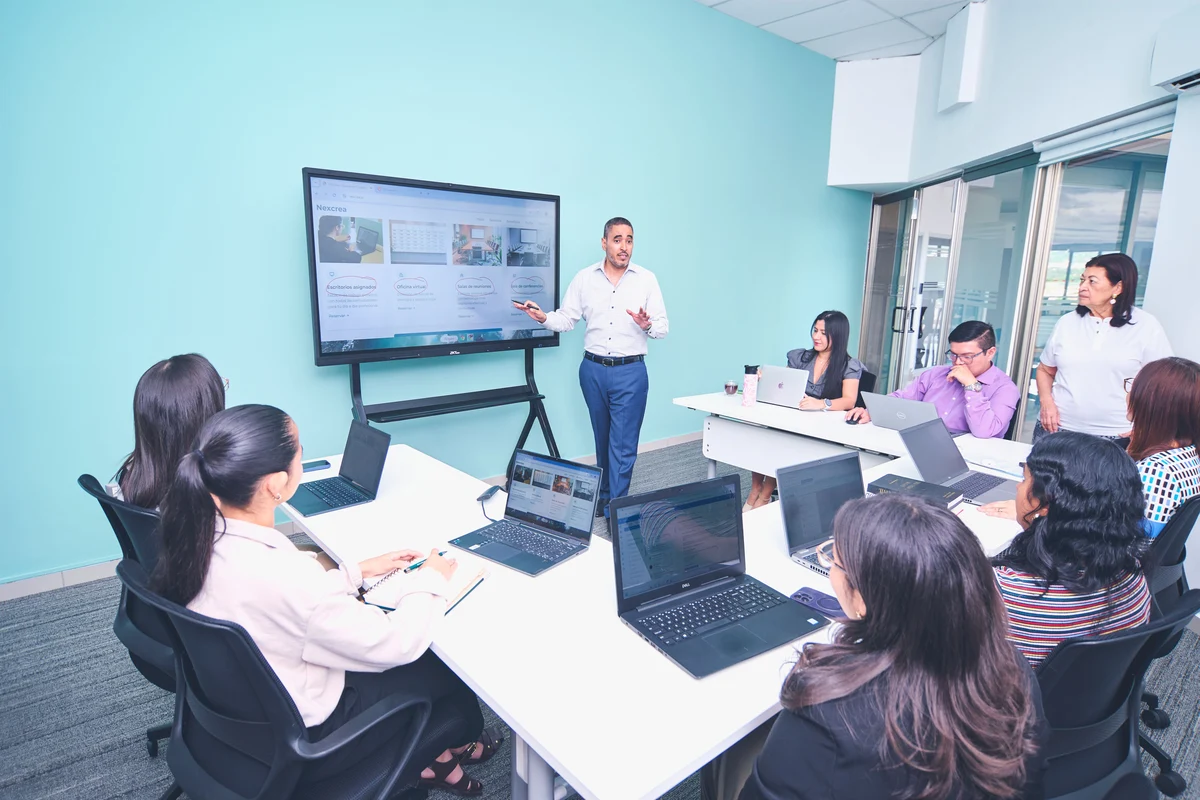
When doing introductions at the start of a session, we often hear participants express their joy at getting together in person. Beyond the learning content itself, classroom training offers a welcome opportunity to step away from the daily routine, connect with colleagues in a different way, and share a collective experience.
We see this regulatory in the training programs we run for our clients. Many participants say they prefer learning in a dedicated space, far from daily disruptions, emails, and urgent workstation demands. In-person learning fosters spontaneous exchanges, questions, discussions, and the sharing of experience. It creates a human proximity that remote learning cannot always deliver with the same intensity.
What we witness at a large organization we have worked with for several years illustrates this perfectly. Participants consistently name in-person sessions as real highlights—not just for their content, but for what they spark among people: a space to breathe, connect, and learn together.
What participants express right from the initial introduction
Training does not actually start with the first slide or the first exercise. It begins the moment you enter the room, in those brief minutes before the official start, as participants catch up over coffee, talk about their commute, recognize a face from a previous session, or meet for the first time.
These informal moments hold a pedagogical value that we often underestimate. They build the psychological safety people need to speak up, ask questions, share their challenges, or try something new during exercises. A group that gets to know each other a little before working together learns collectively faster and deeper.
The break as a condition for learning
The sentiment that comes up most during introductions is the relief of leaving behind, even temporarily, the constant flow of daily work. Notifications, emails, back-to-back meetings, and urgent requests constantly pull at our attention, leaving little room for reflection, learning, and stepping back to examine our own practices.
In-person training creates this break much more clearly than remote options. While you can technically turn off notifications during a virtual class, the physical office environment keeps the mind in a state of alertness that is hard to disconnect. By its very nature, the training room creates a clear boundary between operational work time and learning time.
20 reasons why participants prefer in-person training
Based on our observations in the field, we have gathered the reasons participants share most frequently during our classroom sessions. Together, they paint a clear picture of what the in-person experience brings that remote setups cannot easily replace.
The relational and human aspects
• More natural exchanges: In-person training makes spontaneous discussions, questions, and immediate reactions between participants and the facilitator much easier.
• Closer connection to the facilitator: Participants can easily ask for clarification and benefit from a more personalized learning experience.
• Better group dynamics: Physical presence fosters cohesion, mutual support, and the feeling of sharing a collective experience.
• Richer human interactions: Eye contact, gestures, tone of voice, and facial expressions make communication and understanding much simpler.
• Greater freedom of expression: The climate of trust built within the group encourages participants to openly share their experience and challenges.
• A reduced sense of isolation: In-person sessions meet the natural need for human contact, making participants feel supported throughout their learning journey.
• Sharing experience among peers: Informal moments allow participants to compare their practices and discover new ways of working.
The cognitive and learning aspects
• More active participation: Participants naturally feel more involved when they are physically present in the room.
• Fewer distractions: An in-person setting helps people step away from emails, calls, and the routine demands of their daily workspace.
• Better focus: The training room environment helps participants dedicate their full attention to learning.
• More visible engagement: Physical presence makes it harder to remain passive or multi-task during the training.
• Stronger retention: Interactions, movement, and hands-on experiences make the training more concrete and memorable.
• Learning through observation: Participants also learn by watching others tackle an exercise or react to a situation.
• A clearer break from the daily routine: Leaving the usual workspace creates a true, dedicated block of time focused entirely on learning.
The operational and practical aspects
• Easier hands-on exercises: Role-plays, simulations, and group workshops flow more smoothly in person.
• Immediate feedback: The facilitator can observe participants, correct techniques, and adjust explanations in real time.
• Better grasp of challenges: Participants' reactions and body language help the facilitator quickly spot any misunderstandings.
• Simpler communication: Participants face fewer tech issues with connections, sound, cameras, or digital platforms.
• Faster adaptation from the facilitator: The facilitator can instantly adjust their pace, examples, or activities based on the group's energy and reactions.
• Valuable informal moments: Breaks and conversations outside structured learning blocks strengthen connections and deepen learning outcomes.
Lunch as a key learning moment in its own right
What strikes Altival facilitators most is that learning does not stop at the classroom door. It continues during coffee breaks, in the hallways, and especially during lunch. Simply taking the time to share a meal becomes a valued moment, opening the door for informal conversations, building connections, and helping people get to know each other better.
These informal exchanges hold real educational value. People talk about the morning's exercises, real-life situations, absent colleagues who would have benefited, and different team practices. Conversation solidifies knowledge. Resistance melts away in a relaxed setting. Decisions to change things on the job often take root during these moments, long before the afternoon review.
What this teaches us about designing training programs
These observations are telling. They remind us that professional learning is fundamentally a social experience. We learn better when we are with others—when we can observe, ask questions, make mistakes, and try again in a supportive environment. Being in person naturally creates these conditions. Remote learning can replicate them, but it takes far more instructional design effort to achieve the same intensity.
This also means that the value of an in-person session is not measured solely by the content we deliver. It is also measured by the quality of the interactions generated, the group trust we build, and the decisions to change that spark during informal conversations around the learning activities. A well-designed training program taps into all of these areas, not just class time.
In-person and remote: Complementary, not opposing
Just because participants prefer being in person does not mean remote learning lacks value. Both formats have their strengths and limits. Remote learning is excellent for sharing theory, short modules, reviews between sessions, or post-training follow-ups. In-person training remains irreplaceable for complex practice, group work, sensitive topics that require trust, and team-building moments.
The most effective training programs we design at Altival connect these two formats seamlessly: remote tools to lay the groundwork and ensure continuity, and in-person sessions for moments that demand physical presence, deep alignment, and interpersonal trust.
FAQ: Frequently asked questions about in-person training
Is in-person training more effective than remote learning?
The real question is not which is better, but which fits your learning outcomes. For behavioral training, complex scenarios, and topics requiring strong group dynamics, in-person training generally yields deeper, more lasting results. For theoretical content, follow-ups, and reviews, well-designed remote formats can be just as effective.
Why do participants value informal moments so much?
Informal moments (breaks, lunch, chat between sessions) serve several key learning roles: they reinforce learning outcomes through casual conversation, build the trust needed to take risks in front of others, and help break down barriers that might stay up in a formal classroom setting. They are blocks where learning continues in a different style.
How do you maximize the value of an in-person training day?
You can get the most out of a classroom day by focusing on several levers: highly practical activities that take up the vast majority of the time (80% practice), reasonable group sizes that foster individual exchanges, breaks long enough for informal chats to develop, and a facilitator who knows how to adapt their pace and examples to the group's real-time needs.
Is in-person format suitable for all training programs?
In-person is ideal for training programs that demand scenarios, roleplay, breakout work, or strong interpersonal skills. It is also highly effective for team development, sensitive subjects, or learning aimed at behavioral change. For very short sessions (under an hour) or purely informational updates, remote learning can be more practical and highly effective.
How do you choose between in-person and remote for your training plan?
Let your learning outcomes guide your choices rather than logistics. Ask yourself three questions: Is the target skill behavior-based or informational? Is group dynamic a key learning driver? Do participants need to meet physically to build trust? If you answer yes, in-person training is the way to go. For a custom approach to your training plan, explore our Altival training programs.
Conclusion: In-person training is about more than just content
What our facilitators see session after session confirmed: in-person training is a human experience first and a transfer of knowledge second. It meets a deep need for connection, physical presence, and belonging that even the best-designed remote training cannot always match with the same depth.
The break created by classroom training holds unique value. It allows participants to step away from daily tasks, reflect on their practices, and join colleagues in a space dedicated entirely to growth. They leave not just with new skills, but with stronger relationships and a renewed collective energy.
This core belief shapes every in-person training program we design at Altival: programs that treat the human and collective experience of learning with the same weight as the educational content. Elevate your skills. Embody your values. Discover our training programs and let's build a learning experience that truly matches your teams' ambitions.
Why do some training programs fail to make a difference? Rely on these 4 conditions and overcome the 8 barriers to deliver a learning experience that truly transforms daily practices.
Take action
A 30-minute conversation helps clarify what’s relevant for your teams.