Trend
Team management
5 min
Rédigé le
Managing in the Age of AI: What the Machine Can't Do
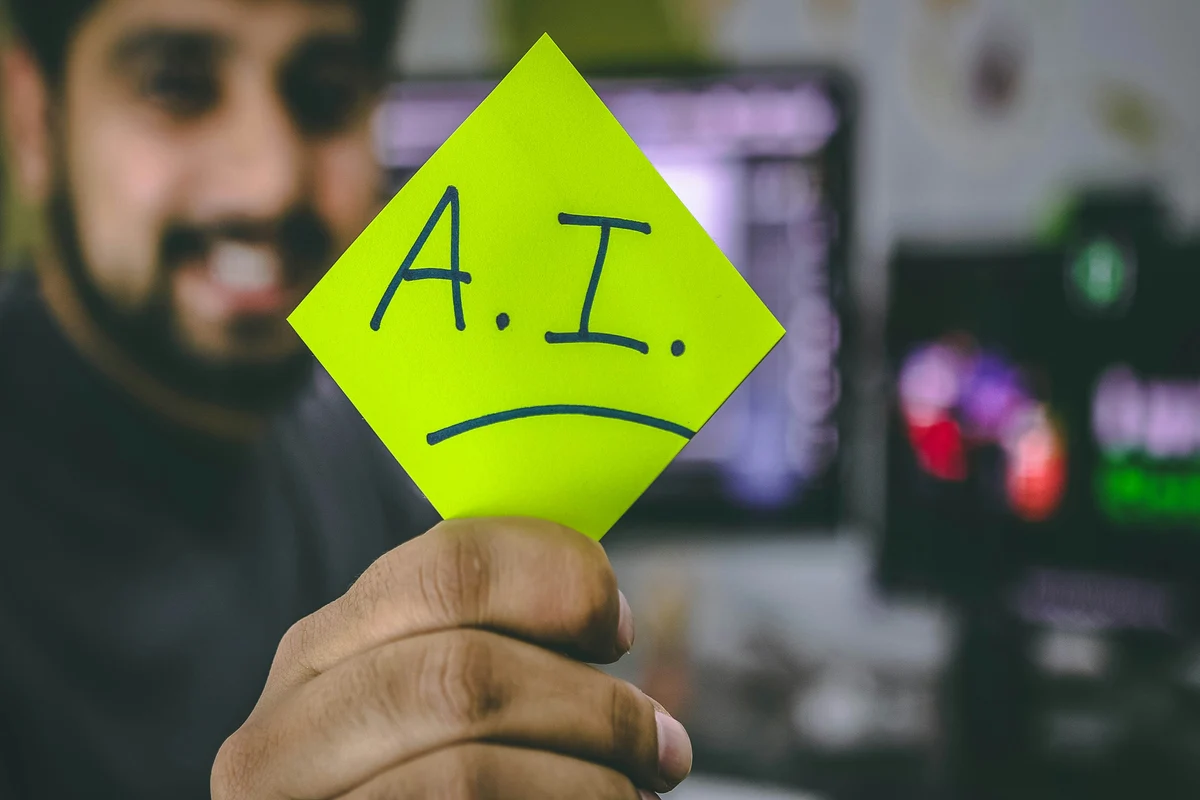
Artificial intelligence is taking over organizations at a speed few had anticipated. In 2025, according to Deloitte, employee access to AI tools increased by 50% in a single year. Within teams, it analyzes data, generates reports, writes summaries, automates repetitive tasks, and suggests operational recommendations. It is fast, available, tireless, and objective.
Faced with this reality, a question echoes throughout organizations: what is the purpose of a manager when a machine can do so much? The answer is clear, yet it deserves to be argued with precision. AI is a powerful tool for decision support and automation. It is not, and will never be, a substitute for human management. Not because the technology is lacking, but because the core of management touches on dimensions that AI structurally cannot handle.
Here are ten of these dimensions—the ones that define what a human manager does better than any algorithm, and which will constitute the most valuable managerial skills in the years to come.
What AI does, and what it cannot do
Let's look closely at what AI can actually bring to management. It can analyze volumes of data that no manager could process alone. It can model scenarios, identify trends, flag anomalies, generate performance reports, prepare meeting summaries, and even detect certain weak signals in collective behaviors. In terms of coordination and information, it represents a significant productivity boost.
But AI operates in the realm of information processing and process optimization. It has no conviction, no moral sense, and no relational intuition. It does not feel an employee's exhaustion behind their messages, grasp the atmosphere of a team in crisis, or know what it means to make a difficult decision with a full conscience of its human consequences. These dimensions are not technological flaws that the next model version will fix. They belong to the very nature of what management is.
The 10 dimensions of management that AI cannot replace
1. Providing meaning and setting a collective direction
An AI can generate an action plan, identify relevant objectives, and model trajectories. What it cannot do is decide on the direction worthy of a team's commitment, nor explain why this project is worth leading together. Meaning cannot be calculated: it is embodied. It stems from the manager's conviction, from their ability to connect operational objectives to the values and aspirations of their team.
In a context where transformations are accelerating and employees face growing uncertainty, the ability to provide meaning becomes a strategic managerial skill. Teams that lack a clear, meaningful direction cannot withstand the pressure of constant change. And only a human manager can drive this direction with credibility.
2. Building an authentic relationship of trust
Trust relies on consistency between words and actions, on real presence during difficult times, on listening without trying to rush a subject, and on keeping promises even when it is costly. These elements are deeply human. A tool can simulate an empathetic response, but it cannot bear the moral responsibility of a relationship.
Trust is not a state: it is a living, fragile process built over time that can break in an instant. It grows from the employee's perception of their manager, and this perception is refined in thousands of daily interactions that no algorithm can authentically reproduce.
3. Understanding the emotions and deep needs of employees
AI can detect patterns in behavior, analyze the sentiment of a written message, or signal a spike in absenteeism. It does not feel the worry of an employee who does not yet dare to express it, perceive the fatigue behind a smile, or capture the deep aspiration of someone who simply says they are satisfied with their role.
This fine-tuned reading of a team's emotional reality requires a mindful presence, developed relational intelligence, and the ability to pause one's own priorities to truly hear what the other person is expressing, sometimes without words. Emotional intelligence remains one of the most irreducible competitive advantages of the human manager.
4. Exercising discernment in situations with no perfect answer
AI excels in environments where parameters are well-defined and optimization criteria are clearly set. But the most complex managerial situations do not look like optimization problems. They involve conflicting values, divergent interests, radical uncertainty about the consequences, and a moral responsibility that no model can bear.
Deciding on a delicate feedback session, mediating between two conflicting employees, choosing to protect your team at the risk of disappointing your hierarchy: these situations call for discernment that mobilizes experience, situational awareness, ethical sense, and managerial courage. These are precisely the moments that AI cannot navigate in place of the manager.
5. Taking responsibility for decisions
AI can advise, model, suggest, and recommend. It cannot take responsibility. Responsibility means exposing your reputation, your judgment, and sometimes your career to a decision whose consequences you cannot know in advance. It means accepting to be questioned, challenged, occasionally making mistakes, and owning them in front of those who live with the effects of that decision.
This moral and human responsibility lies at the heart of the managerial role. A manager who delegates their decisions to an AI without taking ownership of them abdicates precisely what makes them a manager. The tool can inform the decision. It cannot bear it.
6. Managing disagreements and restoring dialogue
Conflicts within a team are not information problems solved by better data processing. They arise from perceptions, unsaid words, relational history, accumulated professional hurt, and misunderstandings that have built up over time. Resolving them requires understanding what everyone actually feels, uncovering what is left unsaid, and creating the conditions where dialogue can flow again.
Restoring dialogue is one of the most demanding and valuable managerial skills. It relies on total presence, benevolent neutrality, and the ability to hold the emotional discomfort of both parties without trying to end it prematurely. It is deeply human work.
7. Helping employees grow
An employee's development involves much more than acquiring measurable technical skills. It requires a relationship of trust with their manager, feedback that hits the mark because it stems from a deep understanding of the person, and support that balances guidance and autonomy according to the actual needs of each stage.
An AI can propose adapted training programs, generate quizzes, or analyze progress against objective key results. It cannot create the tipping point where an employee understands something essential about themselves and what they are capable of. That moment is the fruit of a relationship, not an algorithm.
8. Creating and maintaining psychological safety
Amy Edmondson, a professor at Harvard Business School, has shown in her research that psychological safety—the ability to ask questions, experiment, flag mistakes, and speak up without fear of judgment—is one of the most powerful predictors of collective performance. This safety cannot be decreed: it is built through the manager's daily behavior, in the way they react to mistakes, uncomfortable questions, and disagreements.
In the context of AI adoption, this dimension takes on extra importance. Employees who work in a psychologically safe environment dare to question AI recommendations, flag the anomalies they detect, and share their doubts about automated choices. Psychological safety is the prerequisite for collective critical thinking when facing tools.
9. Uniting a collective team around a common drive
An AI can coordinate tasks, optimize schedules, and distribute workloads based on objective criteria. It does not create the feeling of belonging to something bigger than the individual. It does not generate the pride of succeeding together, solidarity during tough times, or that form of collective energy that makes a team deliver more than what is asked of them.
This cohesion is the product of a shared history, rituals built together, a culture embodied in everyone's behaviors, and the way the manager values and protects this collective. It is one of the most irreducible human dimensions of management.
10. Preserving and developing critical thinking when facing AI
This is perhaps the newest and most specific managerial skill of our time: the manager in the AI era must teach their teams not to be passive users of tools. They teach them to question the recommendations produced by algorithms, evaluate their relevance in the specific context of the team, identify possible biases, and never delegate the responsibility of a judgment that impacts people to a machine.
This role as the guardian of critical thinking is fundamental. An organization whose employees blindly follow AI recommendations without questioning them is fragile, exposed to systemic errors, and unable to detect cases where the algorithm misses the essentials. The manager is the primary guarantor of this vigilance.
AI as the lever, the manager as the pilot
The right question is therefore not: will AI replace the manager? It is: how can the manager fully leverage AI to free themselves from low-value tasks and focus on what constitutes the core of their role?
A manager who uses AI to automate reporting, generate interview summaries, analyze performance indicators, or prepare action plans saves time. They must reinvest this freed-up time into the ten dimensions described here: difficult conversations, presence within their teams, individual coaching, strategic reflection, and collective development.
In this sense, AI does not diminish the manager: it reveals more clearly than ever what makes them a manager, and not simply a task coordinator. Organizations that understand this invest simultaneously in mastering AI tools and in developing human managerial skills. These two investments do not compete: they complement each other.
FAQ: Frequently asked questions about management in the AI era
Will AI eliminate manager positions?
Some middle management roles, primarily those focused on information coordination and reporting, will be deeply transformed by AI. On the other hand, management roles centered on human development, creating meaning, managing conflicts, and complex decision-making are not threatened. On the contrary, their value is highlighted in a context where automatable tasks are handled by the machine.
Which managerial skills will be most valuable in 2026 and beyond?
Emotional intelligence, the ability to build psychological safety, discernment in complex situations, feedback and coaching mastery, and the ability to preserve your team's critical thinking when facing tools: these skills will be the key differentiators in the years to come. They share a common trait: they are human and resist automation.
How can we train managers to work with AI without losing their human leadership posture?
Training managers in the AI era must cover two complementary dimensions: mastering the tools (how to use AI effectively for analytical and organizational tasks) and strengthening human skills (how to maintain and develop the relational, ethical, and decision-making dimensions of the managerial role). Both axes must be developed simultaneously. Our training programs integrate these two dimensions in a coherent approach anchored in field realities.
Should we fear that AI will make poor managerial decisions?
The question is not about fearing that AI will make bad decisions, but about never delegating that responsibility to it. AI provides recommendations based on data. It cannot evaluate all the dimensions of a human situation, particularly the unsaid, relational dynamics, and ethical stakes. The manager who maintains critical judgment when facing AI suggestions, and who takes responsibility for their decisions, is the safeguard against potential pitfalls.
How do you explain to your employees that AI is a tool and not a manager?
Through example above all. A manager who uses AI transparently, explains how and why they use it, maintains their own decisions, and takes responsibility in front of their team, concretely demonstrates the difference between the tool and the role. They also build a culture in which employees feel authorized to question algorithmic recommendations rather than follow them passively.
Conclusion: AI reveals the essence of management
Artificial intelligence does not replace the manager: it reveals the essence of their role. Providing meaning, building trust, understanding emotions, exercising discernment, taking responsibility, managing conflicts, helping people grow, protecting psychological safety, uniting the collective, and preserving critical thinking: ten skills that no algorithm can embody.
As AI takes on more analytical and repetitive tasks, these human dimensions of management do not become less important: they become more visible, more central, and more decisive. Organizations investing in these skills today are building the management of tomorrow.
To develop these essential managerial skills in your teams, discover our training programs, designed to deeply anchor these practices in the daily routine of your managers.
SOURCES
1. Deloitte: State of Generative AI in the Enterprise, 2025

Lead with excellence: the 10 habits that make the difference
Take action
A 30-minute conversation helps clarify what’s relevant for your teams.