Case study
Sales performance
5 min
Rédigé le
A solid partnership: how a century-old industrial group turned sales performance into a tailored experience
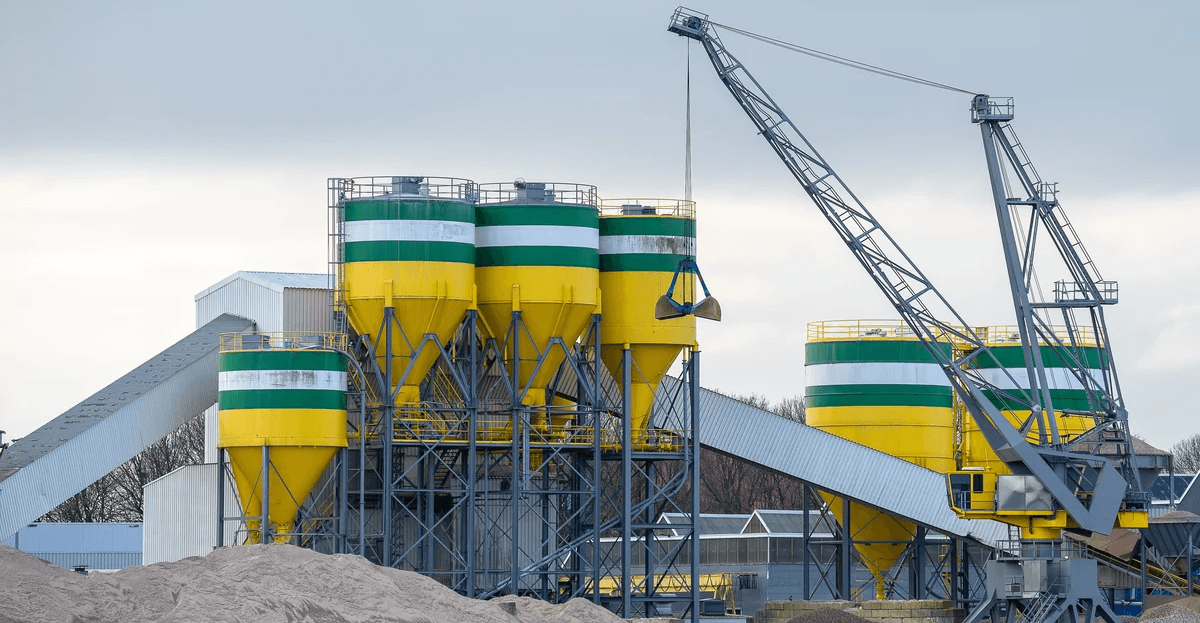
Certain sectors carry a reputation for rigor and tradition that might suggest they are less inclined to invest in sophisticated sales training. The construction materials sector, with its long sales cycles, historic client relationships, and technical products, is one of them. This exact context makes this client case study particularly interesting.
A century-old industrial group, a leading player in cement, concrete, and aggregates serving infrastructure and construction on an international scale, chose to structure a multi-level sales development program. Instead of applying a standardized off-the-shelf program, they designed, adjusted, and co-created an intentional learning journey with their field teams.
The starting point: an ambition to structure sales effectiveness
This partnership began with a shared observation common to many industrial organizations: sales performance can no longer rely solely on the individual experience of sales reps. In an environment of lengthening sales cycles, multiplying stakeholders, and structured competition, the challenge was to provide teams with a common, solid, and scalable mythological framework.
This ambition resulted in a multi-level training program, designed to support the progressive development of the sales teams' skills, from fundamental basics to the most advanced relationship management skills.
What made the difference: a truly tailored approach
Many organizations buy standardized training programs with identical content regardless of the sector or business context. What set this collaboration apart from the very beginning was the requirement for a program designed specifically for the realities of this industrial group: its sector, its technical products, the nature of its often long-standing and complex client relationships, and the diverse profiles of its sales teams.
This customization was not just another sales argument. It was the very core condition for the teams to adopt the program. A generic training program, disconnected from the realities of the industrial field, would likely not have generated the same level of engagement or produced the same sustainable results.
A learning journey designed in progressive levels
Rather than a one-off session, the program was built as a structured learning journey across several levels, each consolidating the lessons of the previous one. This progressive structure allows teams to firmly anchor core skills before tackling more complex commercial situations, avoiding the frequent pitfall of isolated training programs where effects quickly fade after a few weeks.
This step-by-step construction made it possible to adapt the content to the actual commercial maturity of the participants while maintaining overall educational consistency throughout the entire journey.
Skills aligned with the real challenges of industrial sales
The training content was designed to meet the specific challenges of selling in a highly technical industrial environment: the diversity of stakeholders within a single client organization, the need to manage relationships over the long term rather than handling spot transactions, and the challenge of shifting the sales posture from price negotiation to high-value partnership.
This partnership dimension is central in sectors where supplier-client relationships span years, sometimes decades. It requires an equal-to-equal sales approach, based on shared value creation rather than a short-term power struggle over price.
From training to partnership: co-creation as a driver of trust
One of the most significant insights from this collaboration is how a relationship initially focused on training evolved into a true partnership of trust. This evolution did not happen by accident. It is the result of a co-creation approach maintained at every stage of the project.
Rather than imposing a rigid framework, the approach consisted of continuously adjusting content, examples, and role-plays to field feedback, the needs expressed by managers, and the organization's evolving commercial challenges over time. This capacity for continuous adaptation is what distinguishes a training provider from a true development partner.
Proximity as a condition for relevance
For a sales training program to yield sustainable learning outcomes, it must speak the language of the sector, understand its operational constraints, and fit into the daily reality of the teams. We built this proximity progressively through regular exchanges with teams and managers, continuously refining the relevance of the content.
This lasting proximity, even more than the initial training quality, transformed a simple training service into a partnership. A trusted partner is not one who delivers standardized content, but one who stays attentive to organizational changes and adapts support accordingly.
What this case teaches us about sales performance in industrial environments
Beyond this specific sector, several insights from this collaboration apply to any organization wishing to structure its sales performance over the long term.
A progressive learning journey is better than an isolated session
Sustainable sales skills are not built in a single training session. They require a learning journey designed over time, where each step consolidates previous acquisitions and prepares for the next level of skills. This logic ensures much higher retention than a one-off training program, no matter how high the quality.
Customization drives adoption
A training program that does not speak the language of the industry or draw on situations recognizable to the participants will generate limited engagement. Customization is not an add-on service: it is the condition for the real effectiveness of any sales training program.
Partnership selling is a skill in its own right
Selling with a long-term partnership approach, while avoiding the pitfall of a focus purely on price negotiation, requires specific skills: the ability to map stakeholders in complex client organizations, build account development plans over time, and elevate the sales relationship to a high-value advisory posture. These skills are developed through practice, using role-plays close to the realities of the field.
FAQ: frequently asked questions about sales performance training in industrial environments
Why structure a sales training program across multiple levels?
A multi-level learning journey allows us to adapt content to the actual maturity of the participants and prevent the fading of skills that often occurs after isolated training. Each level consolidates the fundamentals before introducing more advanced skills, fostering a sustainable and progressive learning outcome, which is particularly suited to complex sales environments where sales cycles are long.
What is partnership selling and why is it strategic in industry?
Partnership selling consists of building a peer-to-peer business relationship with the client, based on creating shared value rather than price-centered power struggles. In industrial sectors where supplier-client relationships last for years or even decades, this posture is strategic: it allows teams to move away from repetitive price negotiation dynamics to build a sustainable, mutually beneficial collaboration.
How can a training program turn into a lasting partnership?
Transforming a one-off training program into a lasting partnership depends on the facilitator's ability to stay attentive to the changes within the client organization, continuously adjust content to field feedback, and work through co-creation rather than rigid delivery. This ongoing proximity over time transforms a service into a relationship based on trust.
Is customizing a sales training program really necessary?
Yes, it directly determines team adoption and therefore the effectiveness of the program. Training that draws on the actual vocabulary, situations, and challenges of the sector generates much greater ownership than generic content. This is why every Altival sales performance training program is built from the specific realities of each organization we support.
What are the success indicators of an industrial sales training program?
The most relevant indicators combine quantitative measurements (evolution of conversion rates, client portfolio expansion, average contract value) and qualitative indicators (perceived quality of the client relationship, the teams' ability to manage multiple stakeholders, autonomy in building account development plans). Following up several months after each training level allows us to measure the actual integration of skills in daily practice.
Conclusion: a strong partnership is co-created, not declared
This client case study illustrates a core conviction that has guided Altival's approach since its creation: sustainable sales performance is not built on standardized solutions, but on tailored training programs, continuously adjusted, and rooted in a genuine relationship of proximity with the teams we support.
What began as a training project transformed, through co-creation and mutual listening, into a lasting partnership of trust. This capacity to adapt, stay close to clients, and continuously adjust support is what distinguishes a one-off training program from a true development partner.
For organizations wishing to build sustainable performance for their sales teams, discover our sales performance training program, tailored to adapt to the realities of every business sector.
The 9 essential principles to elevate your sales performance
Take action
A 30-minute conversation helps clarify what’s relevant for your teams.