Case study
Customer experience
5 min
Rédigé le
L’Appart Fitness: respecting the framework to elevate the member experience
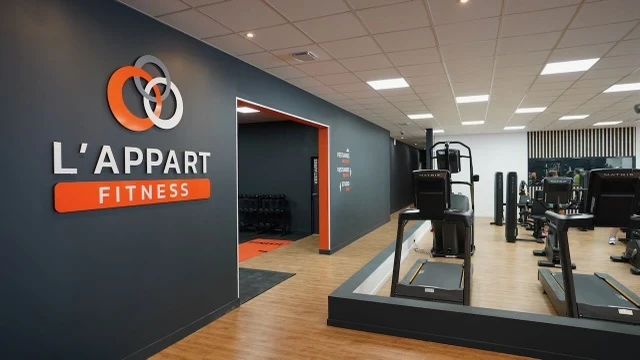
L’Appart Fitness, a network of sports clubs, cultivates a family spirit where every member finds their place. Driven by a passion for sport and well-being, they create a friendly and warm environment for all fitness enthusiasts. Their ambition is not limited to athletic performance: it also encompasses the quality of the experience at every visit, in every interaction with the team.
This is why L’Appart Fitness partner with Altival to further strengthen the quality of their members' experience. To experience sport as a true moment of well-being, a safe, respectful, and caring environment is essential. And this environment is built every day, in every interaction.
According to a study by the INRS (2022), 44% of employees in public-facing roles report having experienced at least one incivility during the year. In sectors where customer relations lie at the heart of the business, particularly sports, well-being, and leisure, this reality is particularly prominent. The question is not whether incivility will happen, but how to anticipate and respond to it systematically.
The framework: why rules serve everyone's well-being
A fitness club is a shared space. The rules that govern it, whether they concern safety, hygiene, or mutual respect, are not constraints. They are the conditions that allow everyone to fully enjoy their time and feel comfortable in the collective space.
At L’Appart Fitness, we expect all members to understand and apply these rules. Not out of obligation, but out of a shared belief: everyone's well-being depends on everyone's behavior. This vision transforms the rule into a collective value, and respecting it into an act of consideration for fellow workout partners.
Yet, reminding someone who is not respecting a rule is never easy. It is an uncomfortable situation, sometimes a source of tension, which requires both firmness and kindness. This is precisely where a structured method makes all the difference.
The broken window theory: why ignoring one incivility invites others
The broken window theory, developed by criminologists James Wilson and George Kelling in the 1980s, relies on a simple but powerful principle: an incivility left unanswered sends an implicit signal that rules are not really enforced. This signal invites other similar behaviors, creating a gradual normalization of misconduct.
Applied to a sports environment, this principle is particularly eye-opening. Equipment left unreturned, a tolerated disrespectful remark, a hygiene rule ignored without consequence: each of these micro-signals weakens the collective framework. Conversely, every prompt rule reminder, however brief and kind, reinforces the norm and protects the environment of trust that everyone came to find.
That is why preventing incivilities starts long before a problem erupts. It begins with the team's daily posture, the quality of the greeting, the way rules are explained, and the consistency with which they are reinforced.
Preventing incivilities: leading by example as the primary lever
Preventing incivilities does not start at the moment of correction. It begins much earlier, in every daily interaction between the team and the members. Being a coach or a sales representative at L’Appart Fitness means constantly embodying the values we want to see live in the club.
This exemplary behavior unfolds at several levels:
The welcome: every member who enters the club must feel recognized, welcome, and respected. A warm and professional welcome immediately sets the foundation for a quality relationship.
Information: club rules must be explained clearly, showing how they benefit everyone. A rule understood is a rule better accepted.
Understanding needs: taking the time to listen to what the member is looking for and understanding their request defuses many frustrations before they turn into tension.
Empathy in the response: providing an adapted solution, whether it fully answers the request or offers an alternative, with sincerity and consideration.
Preventive advice: offering relevant advice that helps the member avoid the situation in the future. This shows commitment to them, going beyond simple resolution.
Constant courtesy: under all circumstances, even in moments of tension, the tone remains professional, respectful, and kind.
Each of these behaviors helps create an environment in which members feel both free and responsible. A framework that does not need to be imposed because it is mutually shared.
The STOP method: correcting with kindness when boundaries are crossed
Despite all precautions, some behaviors occasionally cross acceptable limits. In these situations, the team must intervene. But intervening does not mean confronting. This is where the STOP method comes in, developed by Altival to give the L’Appart Fitness team a clear, kind, and effective structure.
This method unfolds in four stages, each meeting a specific goal.
S: Show understanding
The first step is to show the member that you understand their situation, without validating their behavior. There is always a reason behind inappropriate behavior: a misunderstanding, frustration, or a bad day. Recognizing this human reality before intervening creates the conditions for a constructive dialogue.
T: Transmit feelings
The second step involves expressing the impact of the behavior on the relationship or the collective environment, without attacking the person. We use "I" statements to express a feeling or a factual observation. This aligns with non-violent communication: we address the behavior, never the identity.
O: Orient toward mutual respect
The third step is constructive redirection. We explain what we expect, in a positive and concrete way, and invite the member to cooperate. The goal is to re-establish the shared framework, not as a constraint, but as a mutual commitment.
P: Positve future
The fourth step focuses on relationship building. Once the framework is re-established, we move forward on a positive note. A word of thanks, a smile, or a question about today's session: these small gestures signal that the difficult exchange is closed and the relationship continues.
Example: "Thank you for your understanding. Can I help you with anything else?"
Assertiveness: the key skill behind the method
What makes the STOP method effective is the posture that supports it. This posture is called assertiveness. Assertiveness is the ability to state your needs clearly and set boundaries, while remaining respectful of the other person. It is neither passivity (enduring without reacting) nor aggressiveness (reacting disproportionately). It is the middle path: firm and kind.
In the context of a sports club, assertiveness is a professional skill in its own right. It requires practice, just like any other professional technique. This is why Altival has designed training programs that do not just explain the method, but bring it to life through real-life scenarios, closely matching the daily routine of L’Appart Fitness teams.
Because being a coach or a sales representative in a sports club is a relationship-driven job. Every interaction is an opportunity to strengthen the connection with the member, anchor the club's values, and demonstrate what the Appart Fitness spirit truly means.
From broken windows to reinforced trust: the long-term impact of prevention
The broken window theory teaches us that the physical and social environment sends constant signals about what is acceptable. In a sports club like L’Appart Fitness, these signals play out in every detail: the order of the equipment, the cleanliness of the spaces, the way a rule is reinforced, and the tone of a difficult exchange.
By intervening at the first signs of incivility with assertive and respectful communication, the team does more than solve an isolated issue. They send a clear message to all members present: here, rules matter, and we apply them with kindness for everyone's well-being.
This message, repeated and embodied daily, builds something valuable: an environment of trust, in which every member feels respected, protected, and free to focus fully on their practice. This is what we build together, Altival and L’Appart Fitness.
FAQ: frequently asked questions about preventing customer incivilities
What is the broken window theory and how does it apply to a sports club?
Developed by Wilson and Kelling in 1982, the broken window theory suggests that an environment where minor disorders are tolerated tends to attract larger ones. In a sports club, this means that a non-reinforced rule, a tolerated disrespectful behavior, or unreturned equipment without intervention implicitly signals that boundaries are soft. By intervening early, the team protects the collective atmosphere.
How do you apply the STOP method in real-life situations?
The STOP method unfolds in four steps: Show understanding of the member's situation, Transmit your feelings regarding the problematic behavior without attacking the person, Orient toward mutual respect by explaining clearly what is expected, and Positve future to rebuild the connection. This sequence, practiced in training programs with real-world scenarios, becomes a reflex you can use even under pressure.
Why is assertiveness essential in customer relations?
Assertiveness allows you to express a limit or a rule without resorting to passivity (submitting without reacting) or aggressiveness (reacting disproportionately). In a customer relationship context, it is the key condition for maintaining both the collective framework and the quality of the individual relationship. You can develop and train this skill like any other professional asset.
How do you train teams to prevent incivilities?
The most effective training combines theoretical concepts (STOP method, non-violent communication, assertiveness) with real-world scenarios experienced by teams. This approach, which is 80% practical, helps establish lasting reflexes. To learn more about our approach, view our de-escalation training program.
Is preventing incivilities compatible with a warm customer relationship?
Absolutely. Preventing incivilities is not about hardening relationships, but about clarifying them. By setting a clear framework with kindness, we actually create the conditions for a more peaceful and lasting relationship. Members who train in a respectful, well-structured environment trust the club, feel comfortable, and stay longer. Caring firmness is a driver of loyalty as much as safety.
Conclusion: combining courtesy and firmness for a lasting environment
Preventing customer incivilities is not about managing problems. It is about building, day by day, an environment where problems occur less often and are resolved better when they do. At L’Appart Fitness, this belief translates into a commitment to professionalism in every interaction: the welcome, the active listening, the response, the advice, and, when necessary, the redirection.
The STOP method and the broken window theory are not tools reserved for crisis situations. They are daily guides for teams who choose to work with a constant focus on collective well-being. By combining courtesy and firmness, every interaction becomes a lever for a harmonious atmosphere and a lasting relationship with every member.
Do you want to train your teams in this posture? Discover our de-escalation training program and transform every difficult situation into a demonstration of professionalism.
Taking it further
Download our guide: How to defuse customer incivilities
Read the article: the 9 hidden impacts of incivility at work
6 steps to defuse uncivil behavior
Take action
A 30-minute conversation helps clarify what’s relevant for your teams.